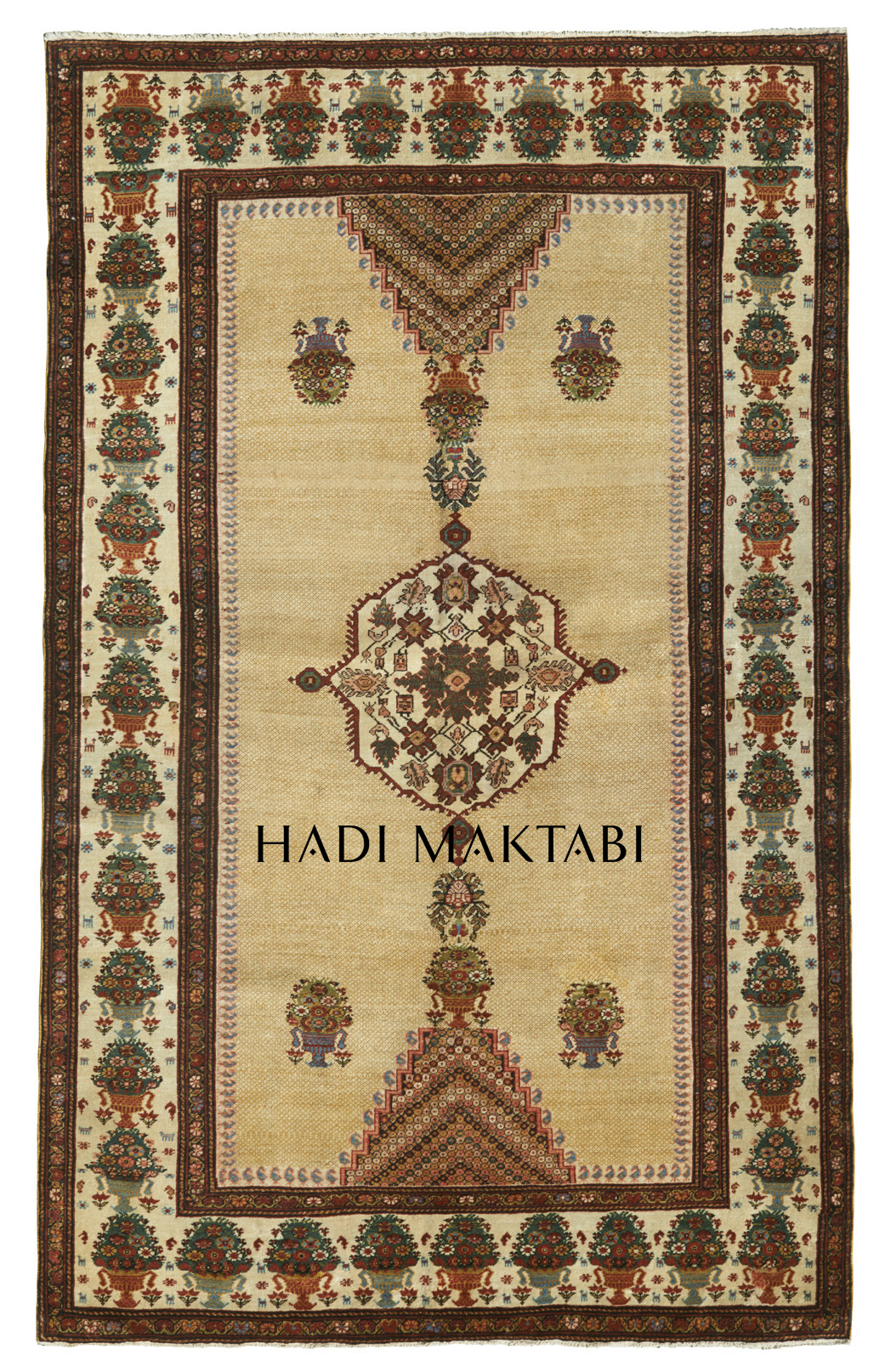
Number 442
Type Village
Material Wool
Style Medallion
Origin Farahan
Size 205 x 119
Age 1860
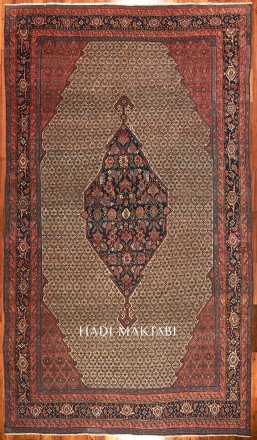
Prior to the Ziegler led Revival of the 1870s, Farahan was one of the foremost weaving centers in Persia. Leading Qajar dignitaries set up private workshops as side businesses and tapping into the area's superb wool and the locals' natural flair with weaving. This masterpiece in the soon-to-be baptized Zilli Sultan style is an awesome exemplar of that.
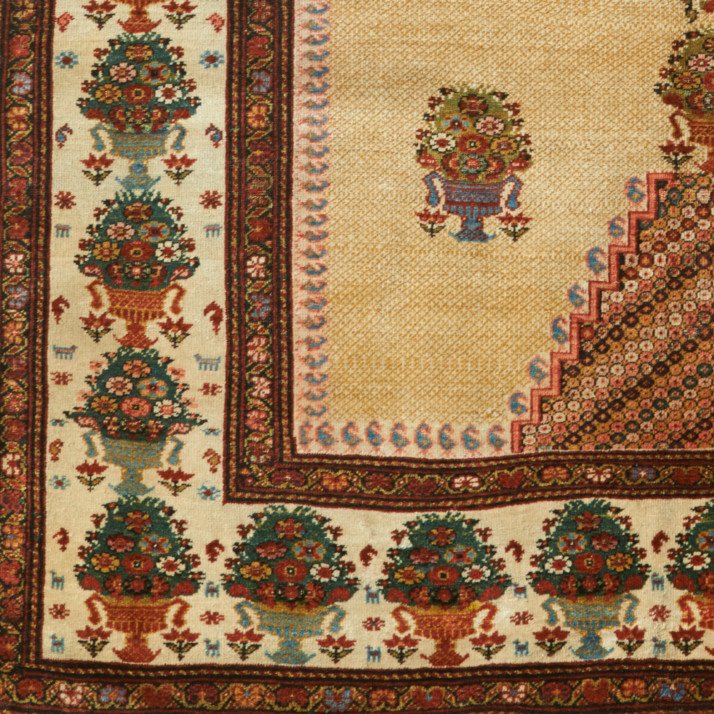
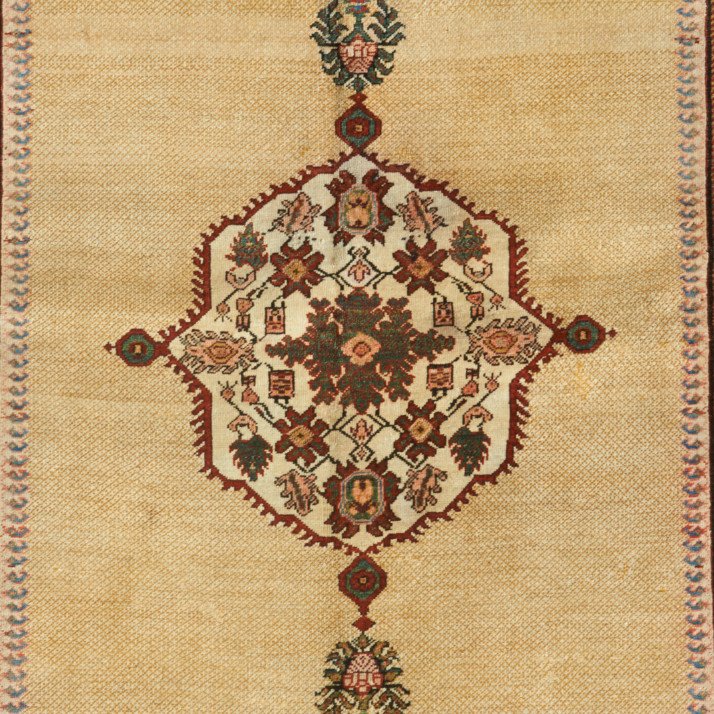
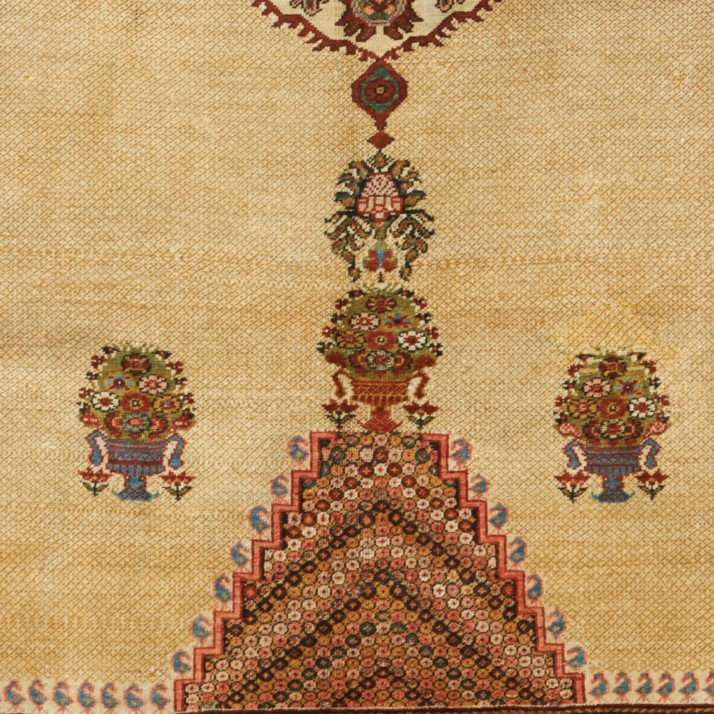
Saffron dyed with a remarkable central axis leaving the sides of the field quite vacuous in a most charming way. The border is another tour de force with its sequence of delicately drawn flowering vases. This style was to be termed Zilli Sultan as of the 1880s. Observe the row of tiny booths hugging the border from the edge of the field and wonder at the level of attention, dedication and skill needed to create the two pyramids of color either side of the medallion. This artwork is one of those that makes me proudest to own and is almost impossible to replace.
Perfect condition. Museum quality. For further info see 𝐓𝐡𝐞 𝐏𝐞𝐫𝐬𝐢𝐚𝐧 𝐂𝐚𝐫𝐩𝐞𝐭: 𝐓𝐡𝐞 𝐅𝐨𝐫𝐠𝐨𝐭𝐭𝐞𝐧 𝐘𝐞𝐚𝐫𝐬 𝟏𝟕𝟐𝟐-𝟏𝟖𝟕𝟐.
I first met Dr. Maktabi as a lecturer on carpet history and was captivated by his passion for the subject. Only later I knew him as a dealer, though even in our financial transactions, Hadi has been a gentle guide and friend. He has understood my taste and interests and made wonderful suggestions, but never in a pushy way. That is to say I have enjoyed working with him on several levels and wish to continue our excellent relations and dealings far into the future. A. Harvey Pincis, formerly Dar Al Athar Al Islamiyyah Museum (Kuwait), Latvia 🇱🇻
“I practically furnished my entire home with carpets from Hadi. The process was not only a joy but it was also a learning experience for me. Hadi was super helpful in identifying the right pieces for my home that would both work with my taste, budget, sizes required and that would be a good investment for my family. Hadi’s collection is second to none, and his knowledge and service is truly the blessing on top.” Amr Banaja, Public Investment Fund, Riyadh, Saudi Arabia 🇸🇦
“You don’t just buy a rug from Dr Maktabi... It’s an experience, a rich one! You learn about history, culture & art. And more importantly you feel euphoric!” Dr Siamak Abolhassani, Expert Medical Care Clinics, Victoria, Australia 🇦🇺

 Email List
 Request Offer